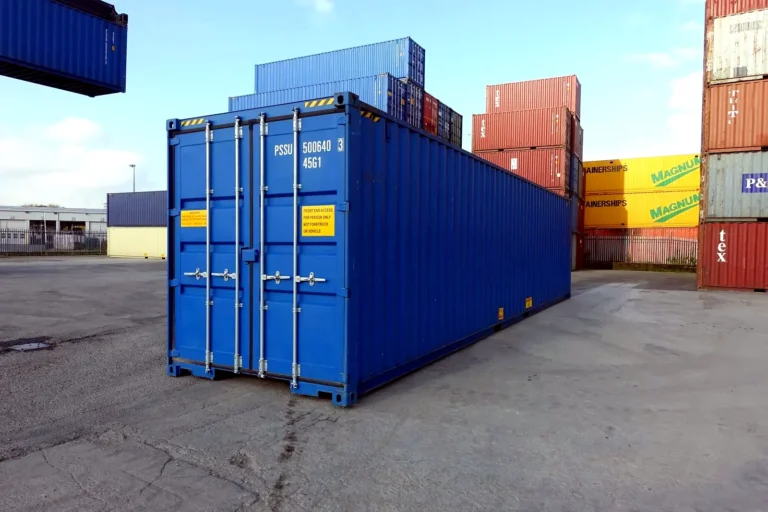
Shipping Container Financing: Options for Business Buyers
Purchasing shipping containers can be a significant investment for businesses that need additional storage, equipment space, or operational capacity. Shipping container financing allows eligible business buyers to spread the purchase cost over time instead of paying the full amount upfront.
Whether you’re purchasing a single 20ft container, expanding a fleet of 40ft containers, or investing in customized container offices, the right financing option can help preserve working capital while supporting business growth.
However, financing availability depends on the container type, purchase amount, business finances, lender requirements, and intended use. In this guide, we’ll explore the main financing options, explain how to compare costs, and outline the steps to finance shipping containers for your business.
What Is Shipping Container Financing?
Shipping container financing is a funding arrangement that allows a business to purchase or acquire shipping containers through scheduled payments rather than paying the entire cost upfront.
Depending on the supplier and lender, financing may be available for new containers, used storage containers, high-cube models, refrigerated containers, or customized container structures.
Businesses commonly consider financing when they need to:
- Expand warehouse or inventory storage.
- Add secure storage to construction sites.
- Purchase multiple containers for commercial operations.
- Invest in specialized containers for equipment or temperature-sensitive goods.
- Develop container-based offices, workshops, or other business facilities.
Financing can reduce the immediate cash requirement, but interest, fees, and other contractual costs may increase the total amount paid.
Benefits of Financing Shipping Containers for Businesses
Financing may help businesses acquire the storage capacity they need while maintaining flexibility in their budgets.
1. Preserve Working Capital
Paying for several shipping containers upfront can tie up funds that might otherwise be used for inventory, payroll, transportation, marketing, or other operating expenses.
Financing spreads the purchase cost over an agreed repayment period, potentially allowing a business to retain more cash for day-to-day operations.
2. Expand Storage Capacity Faster
Businesses experiencing growth may need additional storage before they have accumulated enough cash to purchase containers outright.
Financing can make it possible to acquire the required capacity sooner, subject to lender approval and affordability.
3. Manage Business Cash Flow
Fixed repayment schedules can make expenses easier to plan. Depending on the agreement, businesses may be able to select a repayment term that better matches their expected cash flow.
However, payments remain due even if business revenue declines, so it is important to leave sufficient room in the budget for unexpected expenses.
4. Support Larger Purchases
Financing may be particularly useful when purchasing several containers or specialized units with a higher combined cost.
Businesses should confirm that the lender will finance the specific container types, quantities, and associated costs included in the purchase.
Shipping Container Financing Options
Several funding methods may be worth exploring. The most appropriate option depends on the purchase size, intended use, business history, and the lender’s eligibility requirements.
1. Equipment Financing
Equipment financing is one option for businesses purchasing qualifying assets for commercial use.
The lender provides funding toward the equipment purchase, and the business repays the amount according to the agreement. Depending on the structure, the container may serve as collateral.
Some commercial lenders offer equipment loans and leasing arrangements for eligible business assets, but not every lender accepts standalone shipping containers. Confirm eligibility before applying. Wells Fargo Equipment Financing provides an overview of commercial equipment financing options.
Best for: Businesses purchasing containers for operational storage, equipment housing, or other qualifying commercial uses.
2. Business Term Loans
A business term loan provides a lump sum that is repaid over an agreed period, usually with interest and any applicable fees.
Depending on the loan agreement, the funds may cover a container purchase and eligible associated costs, such as delivery or installation.
Approval may depend on business revenue, credit history, time in operation, outstanding debts, and the proposed use of the funds.
Best for: Established businesses purchasing one or more containers as part of a broader investment.
3. SBA-Backed Loans
Eligible U.S. businesses may explore financing through programs backed by the U.S. Small Business Administration (SBA).
The SBA’s 7(a) program supports a range of eligible business purposes, while the 504 program provides long-term, fixed-rate financing for qualifying major fixed assets. Microloans may also be relevant for certain smaller funding needs.
Whether a standalone shipping container purchase qualifies depends on the program rules, lender requirements, and intended use. Do not assume every container purchase is eligible.
Learn more through the official SBA loan programs.
Best for: Eligible businesses seeking financing for qualifying equipment, facilities, or broader business investment projects.
4. Container Leasing
Leasing allows a business to use a container in exchange for scheduled payments under a lease agreement.
Depending on the arrangement, the business may have the option to purchase the container at the end of the term, return it, or renew the lease.
Leasing can reduce the initial cash requirement, but ownership rights and end-of-term obligations vary. Review the agreement carefully before signing.
Best for: Businesses with temporary storage requirements or those that prefer not to own the container immediately.
5. Dealer-Arranged Financing
Some shipping container dealers work with third-party financing providers to help customers apply for payment plans.
The application process may be convenient because the buyer can discuss the container purchase and financing together. However, rates, fees, eligibility, and available terms vary between providers.
Ask the dealer whether the financing is provided directly or by a separate lender. Review the lender’s full agreement before committing.
Best for: Buyers who want to explore financing while comparing container inventory and delivery options.
6. Business Line of Credit
A business line of credit allows an eligible company to draw funds up to an approved limit and repay the amount according to the agreement.
It may be useful when container purchases are part of recurring storage or inventory needs. However, variable rates, draw fees, repayment terms, and borrowing limits can make a line of credit less suitable for a long-term asset purchase.
Best for: Businesses that need flexible access to working capital for recurring expenses and eligible container purchases.
Financing vs. Buying Shipping Containers Outright
Choosing between financing and paying cash depends on your available capital, purchase size, and business priorities.
| Factor | Financing | Buying Outright |
|---|---|---|
| Upfront expense | Usually lower, subject to down payment | Full purchase price |
| Interest and financing fees | May apply | None on the purchase itself |
| Cash available for operations | More cash may remain available initially | More cash is used upfront |
| Ownership | Depends on the financing agreement | Generally immediate ownership |
| Monthly obligations | Regular repayments may apply | No loan repayments |
| Total cost | Usually higher if interest and fees apply | Often lower if no borrowing is needed |
Financing may be helpful when preserving working capital is important. Paying cash may be more economical when sufficient funds are available without affecting the business’s ability to meet operating expenses.
Compare the total cost of each option rather than focusing only on the monthly payment.
How Much Does Shipping Container Financing Cost?
The cost of financing depends on the container purchase price, down payment, interest rate, repayment term, fees, and any additional financed expenses.
There is no single financing rate that applies to every shipping container purchase. Some lenders may decline standalone containers, while others may consider them under eligible equipment or commercial financing arrangements.
Consider the following factors when requesting a quote:
- Purchase price: The cost of the container or container fleet.
- Down payment: The amount you must contribute upfront.
- Interest rate: The rate charged on the borrowed amount.
- Loan term: The length of time available for repayment.
- Fees: Application, origination, documentation, or other applicable charges.
- Delivery and installation: Whether these costs can be included in the financing.
- Early repayment terms: Whether additional charges apply if you repay early.
Example of Shipping Container Financing
Suppose your business purchases a container for $6,000 and pays a $1,000 down payment. You finance the remaining $5,000.
The following example assumes a fixed 10% annual interest rate, monthly payments, no additional fees, and a fully amortizing loan.
| Repayment Term | Approx. Monthly Payment | Approx. Total Interest |
|---|---|---|
| 12 months | $440 | $278 |
| 24 months | $231 | $538 |
| 36 months | $161 | $797 |
These figures are illustrative estimates, not lender offers. Actual payments depend on the agreement, rate calculation, fees, and payment schedule.
A longer repayment term lowers the monthly payment but generally increases the total interest paid. Choose a term that balances affordability with the overall borrowing cost.
What Do You Need to Qualify for Shipping Container Financing?
Eligibility requirements vary between lenders and financing products. Some focus on established businesses with strong financial records, while others consider newer companies or different credit profiles.
Common application requirements may include:
Business Information
You may need to provide your legal business name, business address, ownership details, registration information, and time in operation.
Credit History
Lenders may review business credit, personal credit, or both, depending on the business structure and financing arrangement.
Revenue and Financial Records
Documents may include bank statements, tax returns, profit-and-loss statements, and other financial information that helps the lender assess repayment capacity.
Container Purchase Details
Prepare a supplier quote listing the container size, condition, price, delivery costs, and any additional features or modifications.
Down Payment and Collateral
Some agreements require a down payment or collateral. A personal guarantee may also be required, depending on the lender and transaction.
Before submitting an application, ask the lender about its minimum requirements and whether the exact container purchase is eligible.
How to Finance Shipping Containers: Step-by-Step
Following a structured process can help you compare options and avoid committing to unsuitable terms.
Step 1: Determine Your Container Requirements
Decide how many containers you need, which sizes are appropriate, and whether you require standard, high-cube, refrigerated, or customized units.
Step 2: Request a Written Supplier Quote
Obtain an itemized quote covering the container price, condition, delivery, unloading, and any modifications.
Step 3: Compare Financing Providers
Request quotes from relevant equipment finance providers, business lenders, or dealer-arranged financing partners.
Compare the interest rate, APR where available, repayment term, fees, down payment, collateral requirements, and total repayment amount.
Step 4: Prepare Your Business Documents
Gather the requested financial statements, business information, credit details, and container purchase quote.
Step 5: Review the Approval Terms
Read the financing agreement carefully. Confirm the payment schedule, total borrowing cost, ownership arrangements, late-payment consequences, and early repayment conditions.
Step 6: Finalize the Purchase and Delivery
Once financing is approved and the agreement is signed, coordinate payment, delivery, and placement with the supplier. Do not assume that preliminary approval guarantees funding.
Common Shipping Container Financing Mistakes to Avoid
Financing can help with cash flow, but an unsuitable agreement may create unnecessary financial pressure.
Avoid these common mistakes:
- Choosing the lowest monthly payment: A longer term may significantly increase total interest.
- Ignoring additional fees: Application fees, delivery costs, and other charges can increase the total expense.
- Assuming every container qualifies: Confirm that the lender accepts the specific asset and intended use.
- Overlooking cash-flow risks: Make sure payments remain manageable if revenue falls.
- Failing to compare lenders: Different providers may offer different rates, terms, and requirements.
- Signing without reviewing the agreement: Understand collateral, guarantees, ownership, and default provisions.
- Assuming tax benefits are guaranteed: Tax treatment depends on the business, asset use, and applicable rules. Consult a qualified tax professional before relying on a deduction.
Is Shipping Container Financing Right for Your Business?
Shipping container financing may be worthwhile when purchasing containers supports business growth and paying the full price upfront would place too much pressure on working capital.
It may be suitable for contractors expanding job-site storage, retailers increasing inventory capacity, farms acquiring storage units, or logistics companies purchasing multiple containers.
However, financing is not always the best choice. If you need only one inexpensive used container and have sufficient cash available, buying outright may cost less overall.
Evaluate the expected business benefit, available cash, repayment obligations, and total borrowing cost before making a decision.
Frequently Asked Questions
Can I finance used shipping containers?
Possibly. Some lenders consider used equipment, but acceptance depends on the container’s condition, value, seller, and intended use. Confirm eligibility before making a purchase commitment.
Can a small business qualify for container financing?
Potentially. Eligibility depends on the lender’s requirements, business financials, credit history, and the size and purpose of the purchase. New businesses may have fewer options or need additional documentation.
Can I finance multiple shipping containers at once?
Some lenders may consider financing for multiple containers under a single commercial transaction. Provide an itemized quote and ask whether the lender can finance the complete order.
Does financing cover shipping and installation?
It depends on the agreement. Ask whether delivery, unloading, site preparation, and modifications can be included, or whether those costs must be paid separately.
Is leasing better than financing?
Leasing may suit temporary requirements or businesses that prefer not to own the container immediately. Financing may suit businesses seeking eventual ownership. Compare the full costs and end-of-term conditions before deciding.
Final Thoughts: Choose the Right Shipping Container Financing Option
Shipping container financing can help businesses acquire additional storage and operational capacity while managing upfront expenses. Options may include equipment financing, business term loans, eligible SBA-backed loans, leasing, dealer-arranged plans, and business lines of credit.
The best choice depends on your container requirements, business finances, lender eligibility rules, and expected period of use.
Start by obtaining a detailed container quote, comparing multiple financing offers, and calculating the total cost of borrowing. Read the agreement carefully and make sure the repayments fit your business budget.
Ready to get started? Compare shipping containers for sale, request a detailed supplier quote, and speak with financing providers about the options available for your business.